How far back can you trace your family ancestry?
The quick answer is the mid-19th century when Father's German family and Mother's Irish family also arrived in America.
This will be a little bit about my Mother's family, the Irish Catholic Kirleys and Hollands, who settled in Louisville in the mid-19th Century. They weren't especially prosperous, but they were well-educated by the standards of the day and knew Shakespeare and Dickens and other stars. In those days many actors had drama companies that traveled from city to city playing classics and they got to see lots of them. And of course they read, in many cases aloud, and that's how they got to know Dickens and other great writers. Mother could quote poetry at enormous length and I'm sure Lib (Elizabeth) could too.
I should say here that Mother's family was composed of the oldest sister, Alma, who later died of TB in the early 30s when I was a child. Then came Mother (Dorothy), Elizabeth, Maurice, Mildred, and John. Granny (Alma Kirley Holland) was the star and I remember her with the greatest pleasure and lots of love. She took several trips with us, the best being Canada in 1939 from Toronto to Quebec, then down into New England with a stop at a resort hotel for a week and ending at the 1939 Worlds's Fair for a wonderful time. On that trip we started in Canada and went as far as St. Anne de Baupre (SP?) before heading down into New England where we picked up a boat in Boston for an overnight trip to New York City and a long visit to the world's fair. Father had great ideas about trips and Canada-NYC was just one, but it was terrific.
In the early part of the 20th century traveling acting groups were just as popular as they were in the 19th and Mother's family saw lots of performances of classics and popular plays. No TV, so that's what served instead. I consider that the Hollands and Kirleys were highly cultured and I just wish you could have known Granny.
When Mother was young, Granny and Aunt would each buy two tickets and then take one child. How they worked out that choice I have no idea except as I said Lib who was the family dancer got to see Pavlova.
And the Probsts were not nearly so literary although one of Father's jobs as a kid was to change Mom's library book every week. They were, however, much more prosperous, with a beautiful house and always a new Buick car. Mother's family all got educated in Catholic academies in their early years and after high school Mother and Lib went to normal school which fitted them to teach grade school. Father and his family also went to Catholic school for grade school. But Louisville had two men's high schools and Father went to the one that was not religious or literary.. Mother always blamed Pop for not sending Father to the U of K, but college was the last thing he wanted. His sister, Dorothy Probst Lynch was in normal school with Mother and had a fine career, ending up as a principal.
When I went to Europe after I graduated from college Father was interested in having me see Darmstadt in Germany which is where either the Probsts or Garths or maybe both came from. I should also mention Grandma Garth who was Father's grandmother and still alive when I was little. She must have been nearly a hundred — just like me today — but she was tiny. Father was very fond of her and everyone made a fuss of her, but she kind of gave me the creeps and I don't recall having much to do with her. She lived with a maiden daughter, Henrietta — Aunt Yetty — and Mimi and I were always taken to see them on our summer trips. I hope I've mentioned that when the German part of the family came to this country they arrived in New Orleans and got to Louisville by way of the Mississippi and Ohio rivers. I don't know about the Irish part of the family except Mother once told me that Jim Sullivan's family — Jim was my Aunt Elizabeth's husband — got to Baltimore during the Civil War and when the men found they were going to be taken into the Union army, they simply got on the boat and went back to Ireland. But some of the family stayed. Mother said one family story was about cousins who settled in Dayton at the time of Lincoln's assassination and neighbors lent them black decorations which apparently everybody used to decorate their houses.
Glimpses of the Past
Anna Pavlova and 19th century Louisville
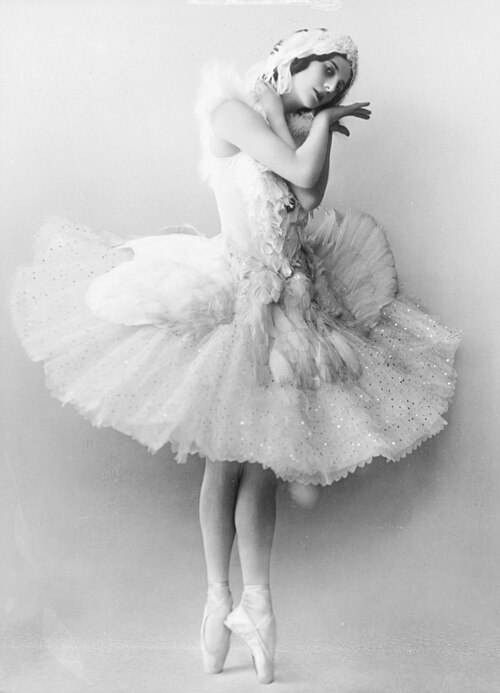
The legendary ballerina in her most famous role — this is what Aunt Lib saw!
The river city where both Irish and German families arrived in the mid-1800s after traveling up the Mississippi and Ohio Rivers
Steamboats brought German immigrants from New Orleans; Irish fled the Potato Famine
Historical photographs from the era when the Kirleys, Hollands, Probsts, and Garths made Louisville their home
Nancy's Family Tree
Four generations from Ireland and Germany to America
Tracing Her Roots
From the rolling hills of Ireland and the valleys of Germany to the banks of the Ohio River
Irish Immigration to Louisville - The Kirleys & Hollands
-
HISTORY: When America Despised the Irish
The 19th century's refugee crisis and the violence of Bloody Monday in Louisville (1855)
-
Immigration to United States: Kentucky
How Louisville's Ohio River cities became destinations for Irish and German immigrants
-
FamilySearch: Kentucky Emigration and Immigration
Mid-19th century Ohio River immigration patterns
German Immigration to Louisville - The Probsts & Garths
-
Wikipedia: History of Germans in Louisville
From August David Ehrich (1817) to the Bloody Monday riots and German prosperity
-
Louisville Public Media: A Tour of Louisville's German Past
Interview with editors of "Germans in Louisville" about Little Germany and German-dominated neighborhoods
-
Library of Congress: German Immigration Surge
How more than 5 million Germans came to the U.S. during the 19th century
Traveling Theater Companies - Shakespeare & Dickens Come to Louisville
Anna Pavlova - "Lib Got to See Pavlova"
-
Wikipedia: Anna Pavlova
Biography of the legendary ballerina who toured the world (1881-1931)
-
Encyclopedia.com: Anna Pavlova
Her American tours from 1910 through the 1920s
-
Encyclopedia of Women: Pavlova
How Pavlova brought ballet to millions who had never seen it before
Normal Schools - Training Teachers in Early 20th Century Kentucky
-
Wikipedia: History of Education in Kentucky
Normal schools, teacher training, and women educators in early 20th century Kentucky
-
Grokipedia: Kentucky Education Association
The establishment of state normal schools starting in 1906 and teacher professionalization
-
The Filson Historical Society: Education in Kentucky
Primary source materials about Kentucky schools and normal school training
Civil War Conscription & Irish Draft Evasion - The Sullivan Family Story
-
Wikipedia: Irish Americans in the American Civil War
The controversial Enrollment Act of 1863 and Irish anger over conscription
-
National Park Service: Irish Soldiers in the Union Army
How recruiters waited at Castle Garden to enlist Irish immigrants "straight off the boat"
-
EBSCO: U.S. Civil War and Immigrants
How 200,000 Germans and 140,000 Irish served in the Union Army, many reluctantly
-
Irish in the American Civil War: Recruiting the Irish
Evidence of Irish draft evasion and return to Ireland to avoid conscription